There’s a strange kind of peace that settles in at the edge of things.
In Pennsylvania, I had finally begun to settle. When you share small, winding country roads with Amish buggies, there’s a stoic rhythm that forces you to move with the seasons – seasons people have threaded their entire lives around for generations. My heart found comfort in 300-year-old farmhouses and the politely kind, but guarded, Quaker sensibility. I was happy. I was putting down roots.
The East Coast is an edge of a different kind. It feels like the place where everything begins. The starting point. The rooting place.
Then one day, I fit all my earthly belongings into a 10’ U-Haul and drove seven hours toward another kind of edge.
No job. No permanent home. Just a certainty I’ve learned to recognize as God. I landed in a lakeshore town where the road quite literally ends, where you could drive straight into Lake Erie if you weren’t paying attention. It sits at the northern edge of the continental U.S., and yet somehow, it feels like the middle of nowhere.
But the water draws people here – by the tens of thousands – every summer.
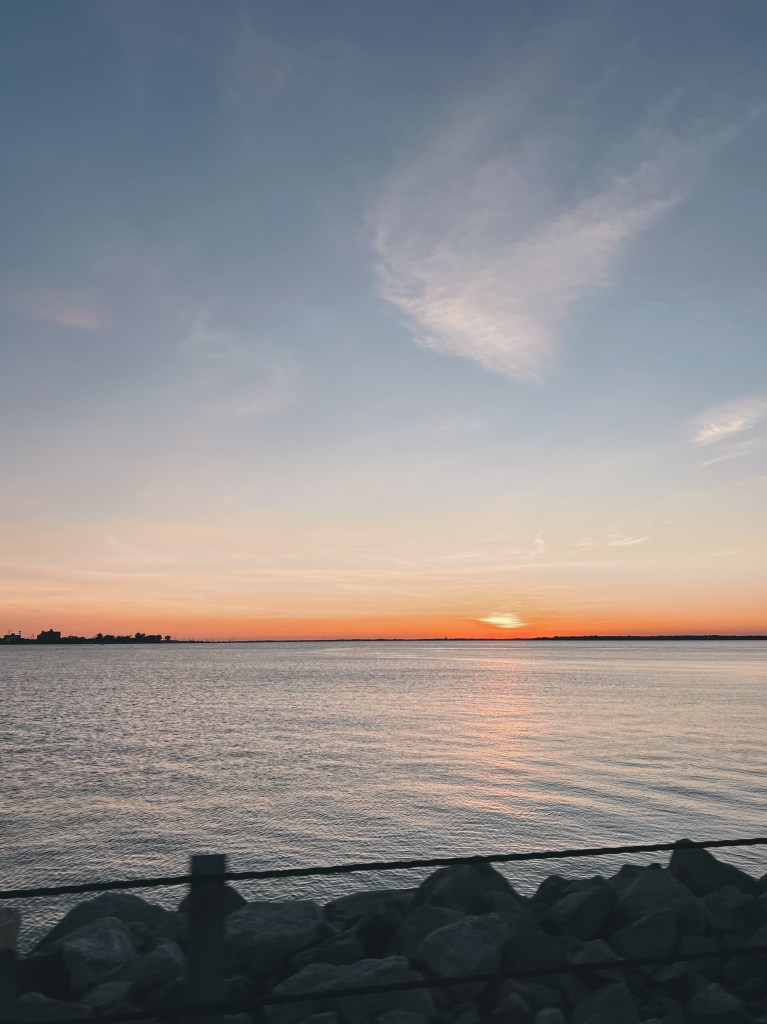
It’s early August, and the town hums with rollercoasters, boaters, and the sound of glee people only have when they’re on vacation. Just last night, I was sitting on the edge of the pier with my best friends as Tommy Boy played behind us on a large outdoor screen in front of a scattering of lawn chairs. There were food trucks and live music from a 90’s cover band. Across the bay, Cedar Point fireworks lit up the sky while small boats docked quietly in marinas up and down the shoreline.
But in the off-season, when the visitors leave and the wind sharpens, you begin to understand how quiet a town can be when it’s no longer trying to impress anyone.
I’ve lived in big cities, and at first I was quick to call this place boring in the off-season. Because, well, sometimes it is. It’s not unusual for shops and restaurants to shutter as school starts, staying closed until May. Whatever remains open will have hours so short you can barely order dessert after dinner. The rollercoasters stop running, and suddenly the hour’s drive to Cleveland for something more entertaining feels necessary.
But boredom is an interesting teacher. It stared me down and I had started to fidget. Maybe I had made a mistake coming here. Then my hands were tied long enough to listen.
When the streets fall quiet, you start noticing the soft-gray buildings – the largest collection of limestone architecture in Ohio- giving the town more gravity than its self-deprecating tone admits. It might feel out of place, except the stone is entirely local, pulled from right beneath the city. People here are prouder of their hometown than they’ll often say. Rightly so. There’s a hardened yet smooth surface to the place, weathered by winter winds, low-maintenance but built to endure.
Here, on this in-between stretch of land and water, I’ve learned what it means to stay present in a place most people are only passing through.
And I’m good at passing through. A missionary kid. An immigrant. An expert wanderer, I am.
I told myself I’d give this town a couple of years, just to break a pattern. To read a little more. To pray a little more.
This is where people come to heal.
To get out of a rut.
To stare at sunsets and remember who they are.
When asked why I moved, I gave the honest answer: I came to be near family. But only my family knew what I left out. That I moved here to be alone.
Because I had not been on my own. Not really. I had been tethered to another person since a month after I turned eighteen. My entire adult life. Severing myself from that was excruciating, and the torn edges were inevitable. I moved here to fill in the gaps, to reclaim the missing fragments. I needed to learn how to live alone.
And I did not hate it. Not one bit.
I am introverted and independent by nature. I cherish solitude. Crave it. Need it.
I was thirty-two by then.
A little frayed. But also, unafraid that this might be it for me. No real fresh starts.
But it turns out frayed edges can be a starting point too. It turns out I can still get cut and bleed.
Because when the excitement of a new place faded, I found community – not in dramatic revivals or summer highs, but in the small, steady ways of the off-season.
In the local coffee shop where I’m greeted by the name I only give baristas, making me feel more seen than if they’d used my legal name.
In the old bank building that houses my new workplace, where I walk in each day for and with people who – sharp-minded brawlers in suits and all – learned how I like a strong pot of coffee brewed first thing every morning.
In an old house and the older couple who once welcomed me to lunch with their grown children after church… and now have family game nights on my calendar.
In the odd collection of women in my small group, who kept showing up—week after week—for brie and Bible study. They somehow got me to spill childhood trauma before they knew my favorite color.
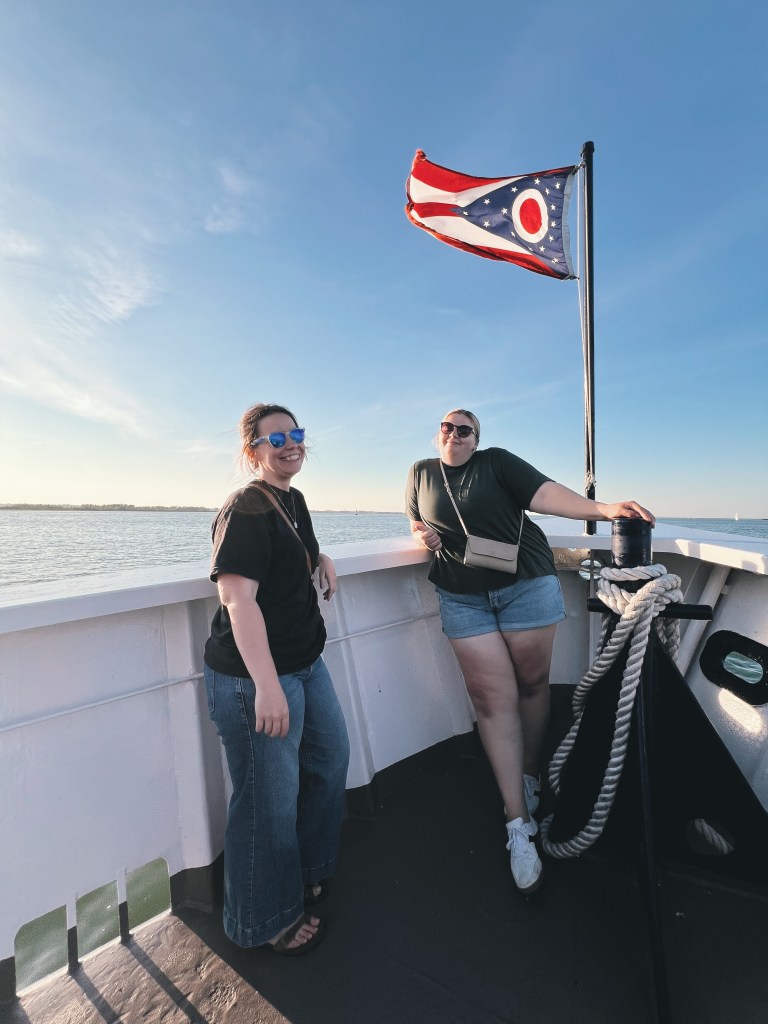
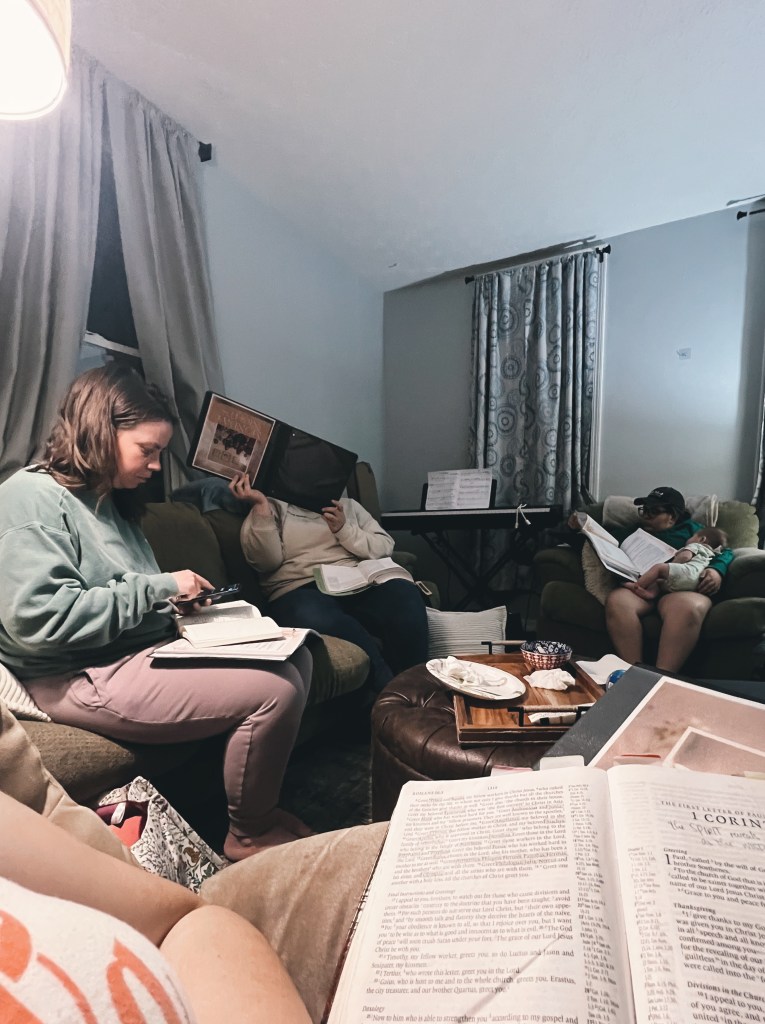
There’s a kind of friendship that grows when no one is rushing.
When no one expects you to be shiny or interesting or healed.
Just… present.
And when you’re no longer trying to impress anyone, you start finding people who leave an impression on you so deep, you might have to consider staying in this odd little town.
Maybe that’s the thing about edges. They feel like endings until you pause long enough to see what’s beginning.
I came here thinking I needed a break – space to be alone, to heal, to not belong anywhere for a while. Yet somehow, in the quiet, in the boredom, in the off-season stillness, I found something that looked a lot like belonging. Not flashy. Not loud. But solid, dug from depth and made to last.
Turns out, the edge of Ohio isn’t where the story ends. It’s where the pages start to turn slower. And sometimes, without even noticing, you’ve arrived at the good part – lake wind in your hair, limestone warm beneath your hands, the horizon stretched wide with nothing but water and sky ahead.
-louriz
 oh mere immortal